Design, permitting, and installation of new septic systems. We handle the paperwork so you don't have to. Builders and homeowners trust Mastin.
Installing a new septic system means designing, permitting, and constructing a complete on-site wastewater treatment system for your property. This usually happens on new home construction, major additions that exceed your existing system's capacity, or full replacements when an old system has reached the end of its life.
A new septic system isn't one-size-fits-all. Soil type, lot size, slope, water table depth, county regulations, and projected household water usage all factor into what kind of system your property needs and where it can legally go.
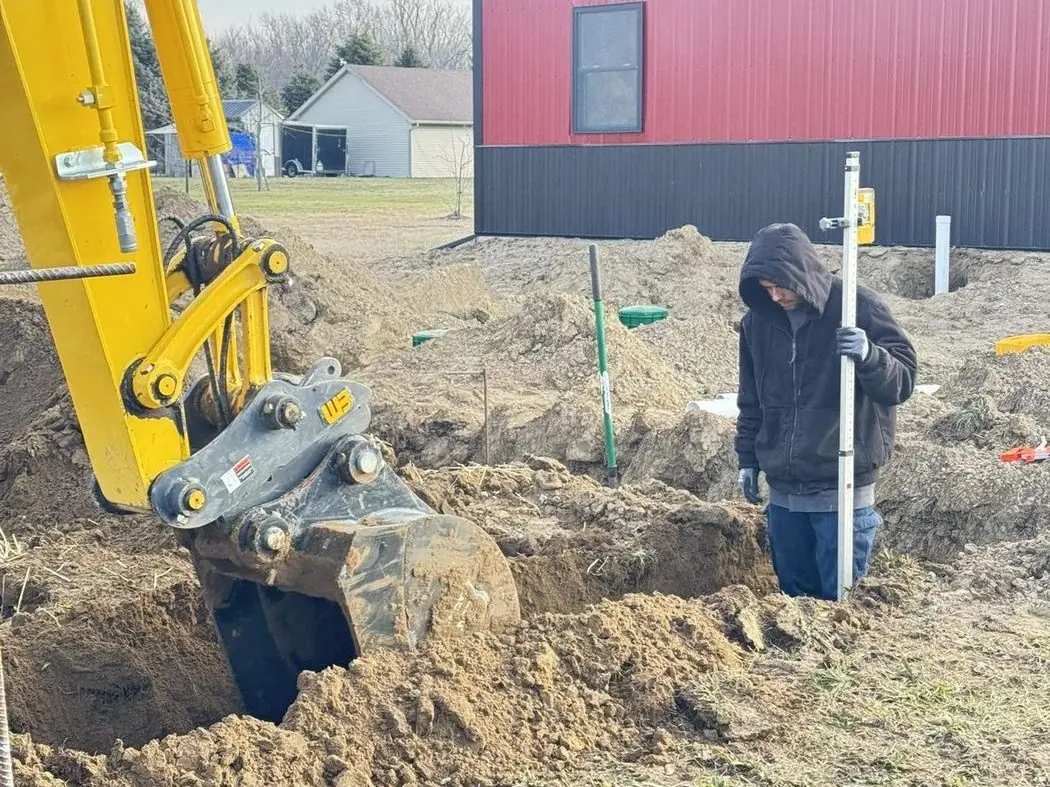
We handle installations across Lucas, Fulton, Henry, and Wood County. That includes working with the local health department on permits, performing soil and percolation tests, designing the system to meet current code, and installing everything from the tank to drain field laterals, distribution box, risers, and access lids. When we leave, your system is permitted, inspected, and ready for decades of reliable service.
Local builders use Mastin as their go-to septic sub on new construction. Homeowners replacing 1970s-era systems call us to install what'll serve the next 30 to 40 years. We've installed hundreds of systems across Northwest Ohio, and every one of them gets the same standard of work.
Get Free Quote →
Every property is different, and what works for your neighbor might be wrong for you. The biggest factors in system design:
Most properties in our service area work with a standard gravity-fed conventional septic system. A concrete tank that flows out to a drain field of perforated pipe buried in gravel trenches. Simple, reliable, and capable of 30+ years of service with proper care. When the soil won't cooperate, we install mound systems, pressure-distribution systems, or aerobic treatment units designed for difficult sites.
Every install starts with a soil evaluation. We dig test pits on your property, the health department evaluates the soil profile, and we design from there. Cutting corners at this stage leads to system failure in 5 to 15 years. We don't cut corners on design, and we don't install systems that won't last.
Get Free Quote →
A typical residential install takes 4 to 8 weeks from first call to functioning system, including permitting.
We visit the property, dig test pits, and evaluate conditions to determine what kind of system fits.
We design the system to code, submit plans to the health department, and handle the permit process.
Excavation, tank set, drain field construction, connections. Typically 2 to 5 days on-site.
County inspects, we backfill, restore your yard, and walk you through how to maintain the new system.
Installations are bigger projects than most other septic work. Typically 2 to 5 days of on-site work, with permitting and design taking weeks before that. Here's the general timeline.
Weeks 1 to 3: Design and permitting. Soil testing, site evaluation, system design, permit application with the county health department. This phase moves faster or slower depending on the county's review backlog.
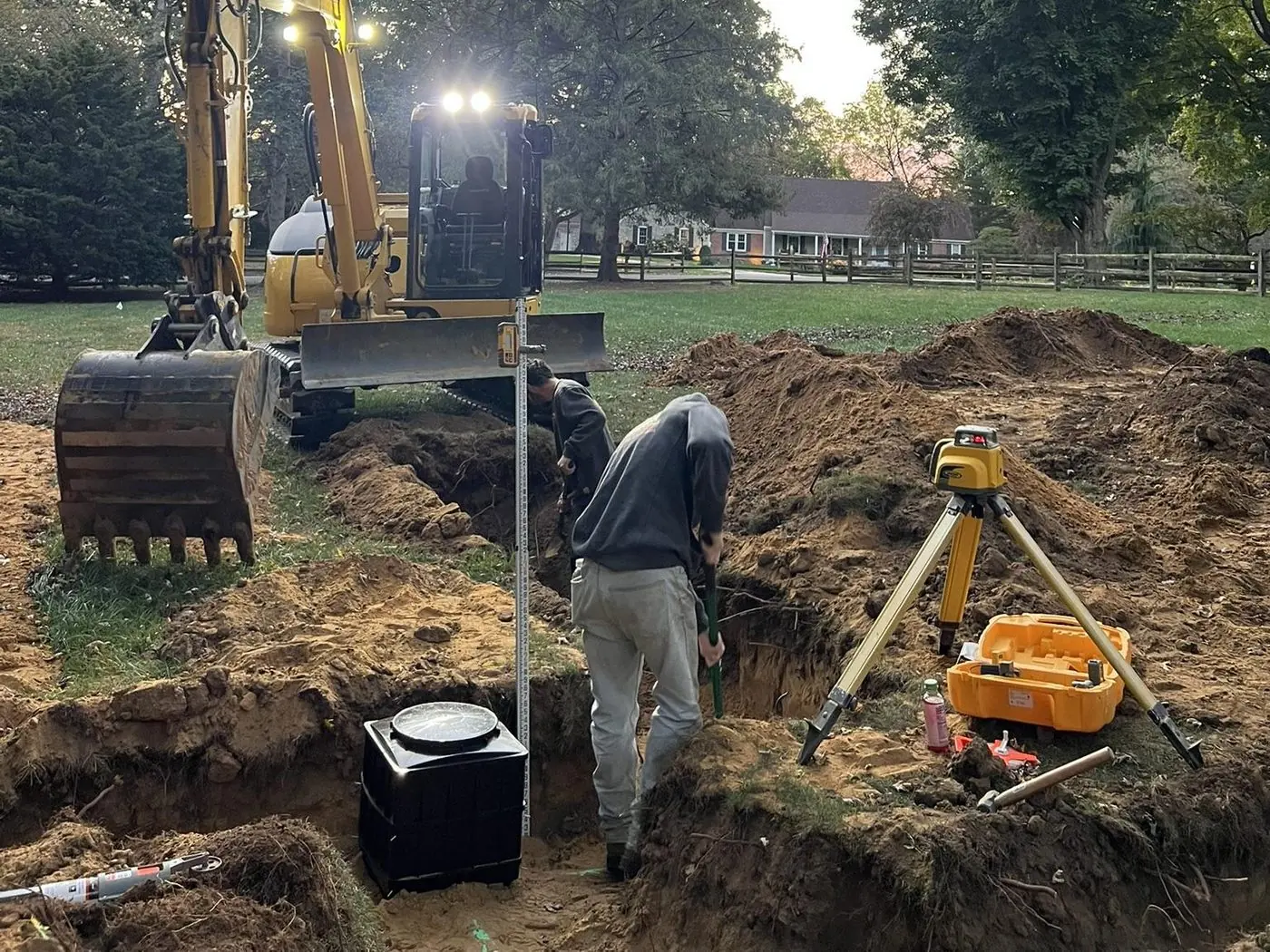
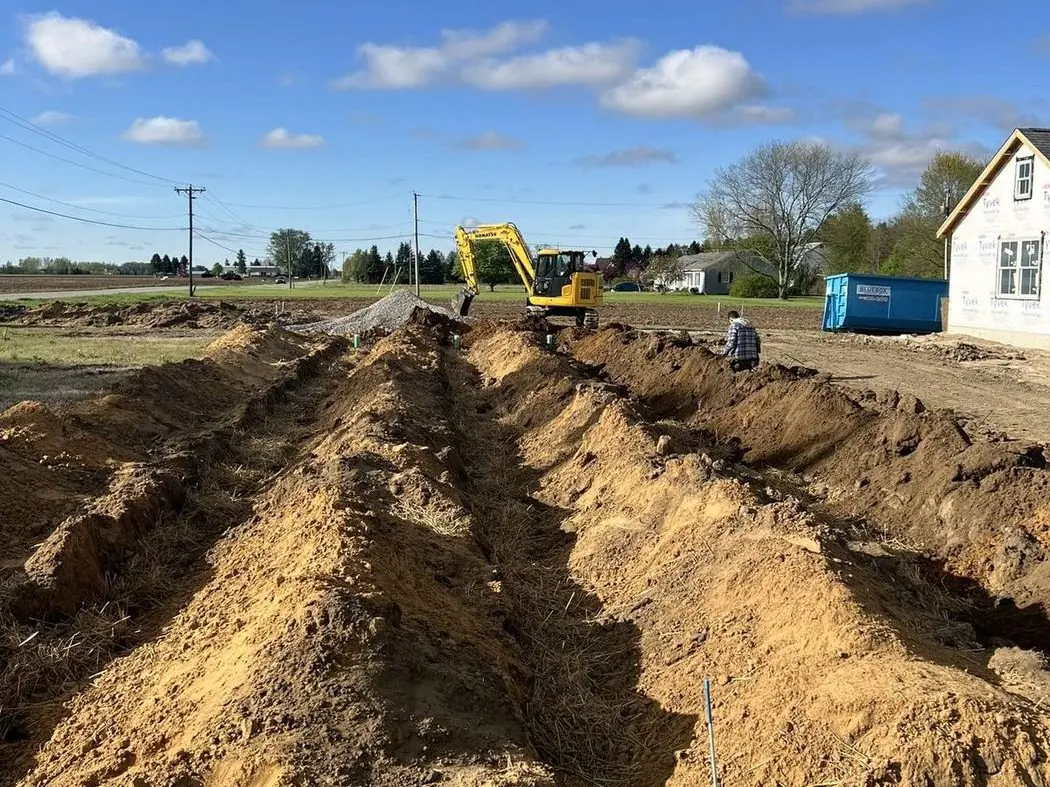
Day 1 to 2: Excavation. The excavator arrives, we dig out the tank location and drain field trenches to spec, and prep the area. This is loud and messy. Your yard will look like a construction site while work is underway.
Day 2 to 3: Installation. Concrete tank gets set, pipes connected to the house, distribution box and drain field laterals go in, gravel and geotextile fabric layered correctly, risers installed for future access.
Day 3 to 4: Inspection and backfill. The county health department inspects the system before we cover it. Once approved, we backfill, grade, topsoil, and seed (or sod if preferred) to restore your yard. You can use the system the same day backfill is complete.
Before we leave, we walk you through how to live with the system. What not to flush, what not to plant over the drain field, and when to schedule the first pumping (typically 2 to 3 years out on a new install).
Get Free Quote →
Local NW Ohio builders use Mastin as their regular septic sub on new construction projects.
We do the design and all county permitting paperwork. You don't deal with any of it.
We install precast concrete tanks for durability. They outlast plastic alternatives by decades.
65 years means we're still around to honor what we put in the ground.