The single most important thing you can do for your septic system. We've been pumping tanks across Lucas, Fulton, Henry, and Wood County since 1960.
Pumping your septic tank means we remove everything that's built up inside it. Sludge on the bottom, scum floating on top, and the wastewater in between. The whole job usually takes about an hour, and it's the single most important thing you can do to keep your system working for decades.
Here's why it matters. Every gallon of water that leaves your house flows into the septic tank first. Solids sink to the bottom and slowly build up as sludge. Oils and fats float to the top as scum. The liquid in between flows out to the drain field, where the soil filters and treats it.
Over time, that sludge layer grows. If it grows too tall, solids start escaping out to the drain field along with the liquid. Once solids enter the drain field, they clog the soil and ruin it. That's when you go from needing a routine pumping (a few hundred dollars) to needing a whole new drain field (thousands).
We've been pumping tanks in Whitehouse and across Northwest Ohio since 1960. Same family, same shop on Waterville Swanton Road. If you're looking for septic pumping in Toledo, Maumee, Perrysburg, or anywhere across Lucas, Fulton, Henry, or Wood County, call us at (419) 877-5351.
Get Free Quote →
Most residential septic tanks need pumping every 3 to 5 years, but that's a range, not a rule. A few things shift where you land:
A family of four with a standard 1,000-gallon tank usually needs pumping every 3 years. A retired couple with a 1,500-gallon tank might stretch to 5 or even 7. If you've got no idea when yours was last done, that's actually a good reason to call. We can open the lid, check the sludge level, and tell you where you stand.
Waiting too long is expensive. Once solids migrate into the drain field, they don't come back out. You can pump a tank. You can't pump soil. Routine pumping costs a few hundred dollars every few years. A new drain field runs thousands. The math isn't hard.
Get Free Quote →
Four steps from your call to a clean tank. We'll work to schedule you as quickly as we can.
Tell us your location, last pumping date, and anything you've noticed. We'll quote you over the phone.
We'll work with you to find a date that fits your schedule.
Truck arrives, tank gets emptied, baffles and pipes checked, and we clean up after ourselves.
Invoice and service date logged. We'll send a reminder when you're due for the next pumping.
Most pumpings follow the same simple process.
Before we arrive. We need access to the tank lid. If you know where it is, let us know when you book. If you don't, we'll locate it for you. Move any vehicles, trailers, or equipment parked over the access area.
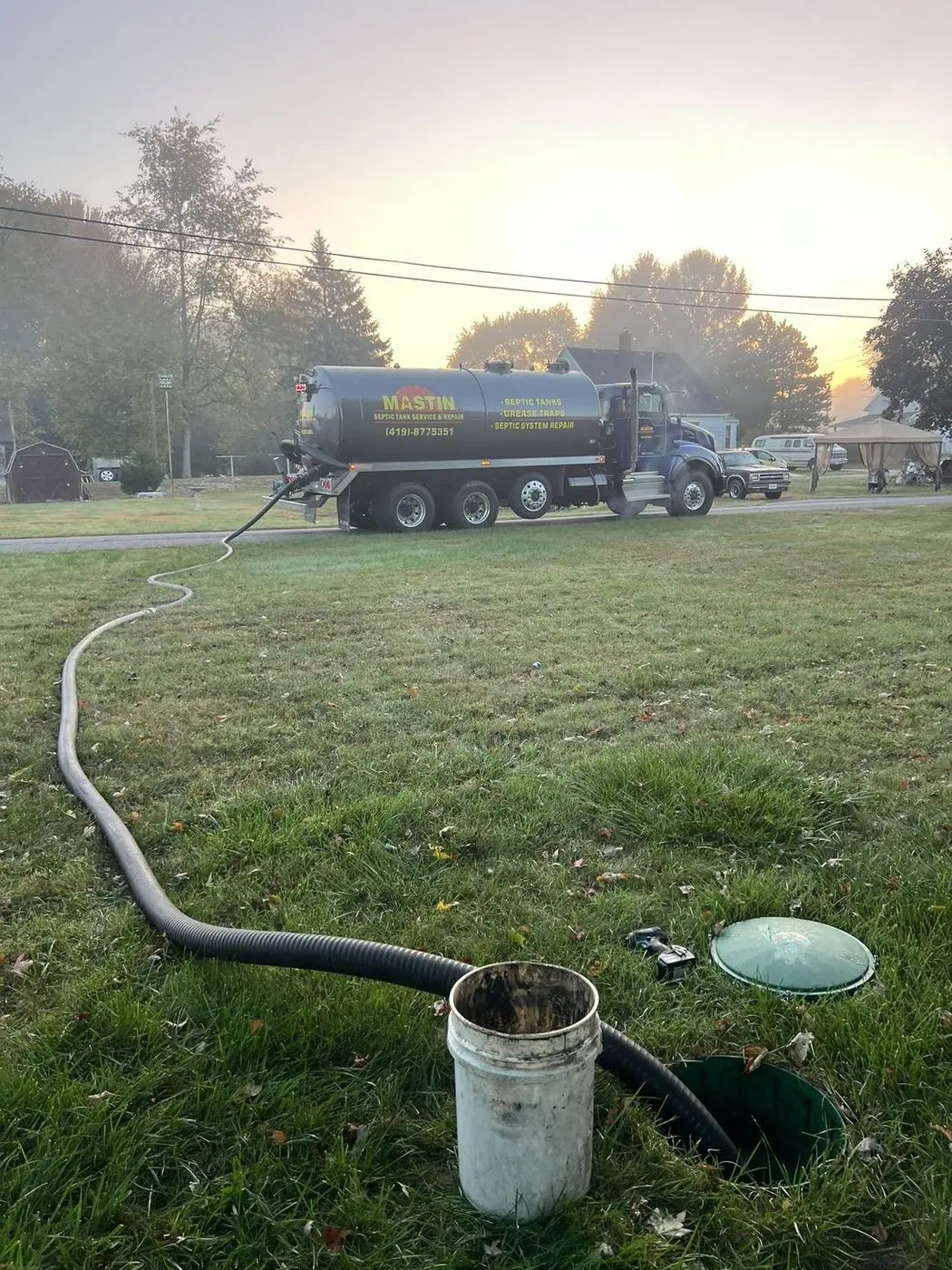
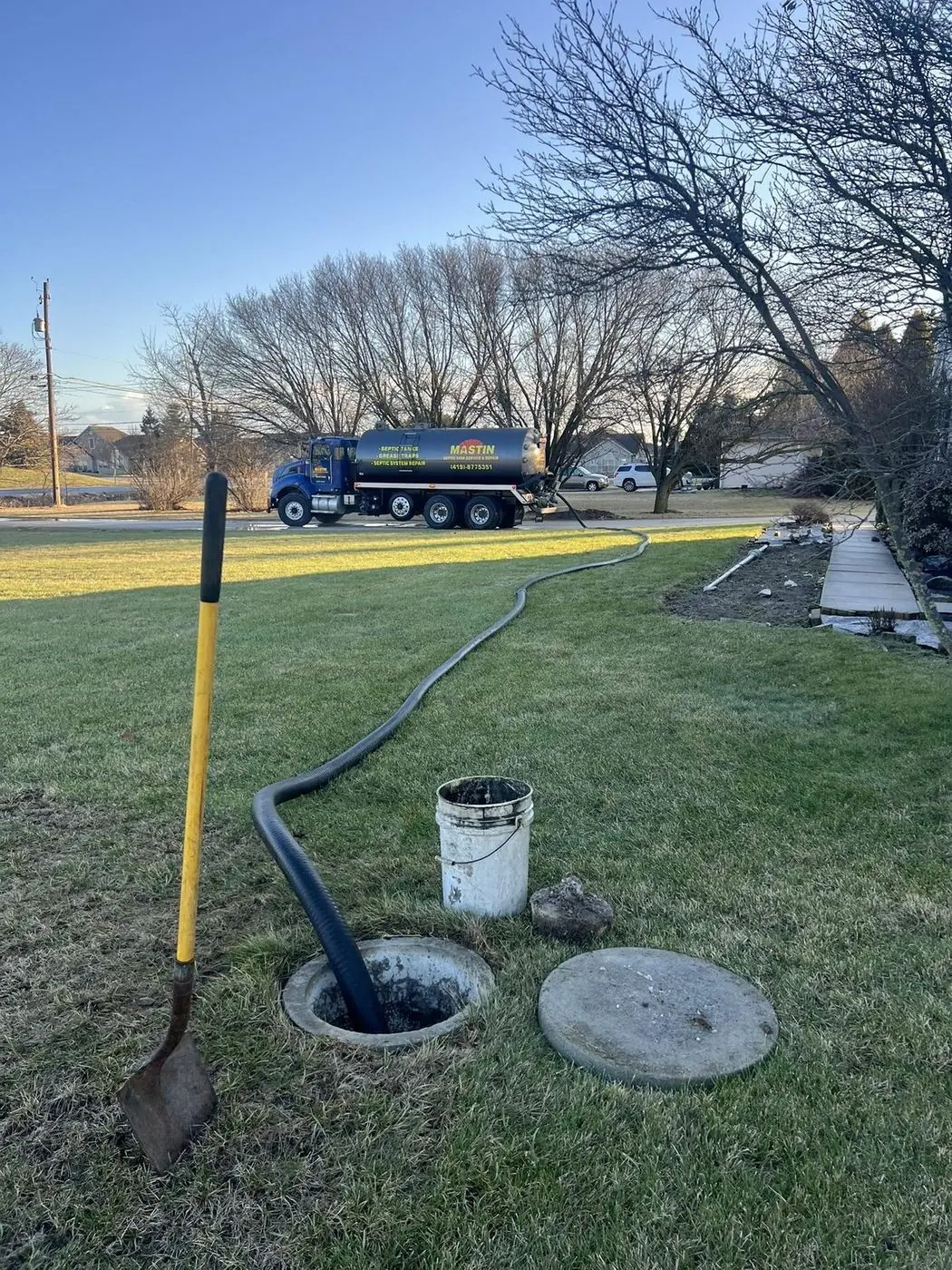
While we're there. The truck pulls up, we open the access lid, and the vacuum hose does the work. We pump the tank until it's empty, then inspect what's visible while we have access. Baffles, inlet and outlet pipes, signs of cracks or damage. If we spot something that needs attention, we show you and explain it. No scare tactics, no high-pressure upsells.
After we're done. The lid goes back on, the access area gets cleaned up, and we haul the waste to a licensed treatment plant. You get an invoice showing volume pumped and the date. Keep it with your home records so you know when the next interval starts.
The whole visit is usually under an hour. You don't need to be home unless you want to be.
Get Free Quote →
Burton and Norma Mastin started the business in 1960. Mandi runs it today.
All our trucks roll out of our Whitehouse shop. No call center, no franchise.
Free phone quotes. You know what it costs before we start the work.
We work to schedule you as quickly as we can. Emergencies get priority.